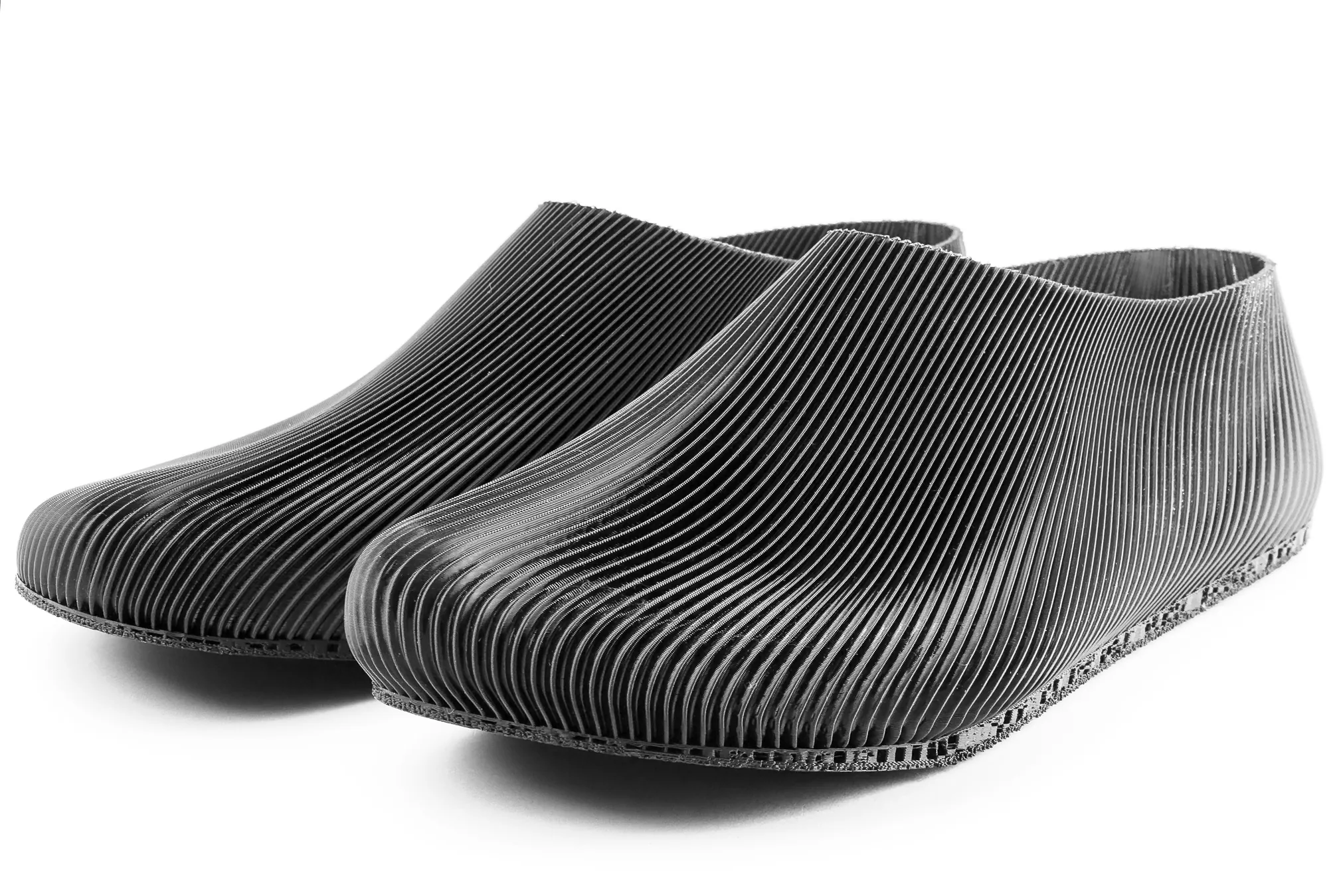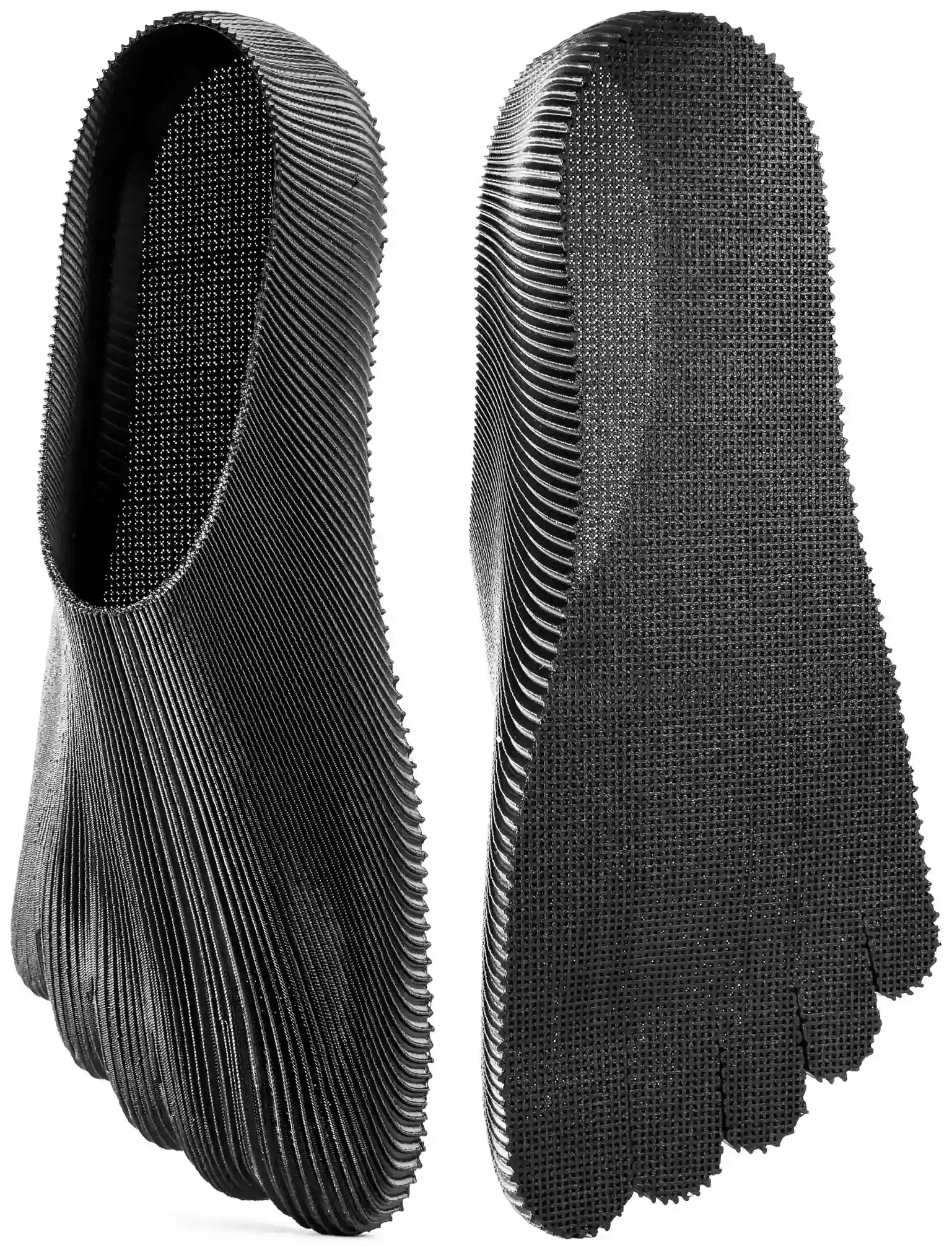
The most common question after "are 3D printed shoes durable?" is some version of "doesn't the sole wear through quickly?". The intuition makes sense — sneakers blow through their rubber soles in a year of daily wear, so a printed plastic sole sounds worse. In reality, the sole is almost never what fails on a 3D printed TPU shoe. TPU is harder and more abrasion-resistant than typical sneaker rubber. After hundreds of hours of indoor and light outdoor wear, the bottom surface still looks new.
What actually fails is the upper. Specifically: the front-top zone on the inside of the foot — the exact line where the foot flexes when you push off into the next step. This is the only place that takes a real mechanical cycle every time you walk. The sole below it just slides on a flat floor; the upper above it bends back and forth thousands of times per kilometer.
Why the flex zone fails first
FDM 3D printed parts are anisotropic. Layer-to-layer adhesion in TPU is significantly weaker than the bulk material strength along the print direction. When you bend a printed wall back and forth at the same point — exactly what the foot does at the flex line — eventually the layers separate along that crease. The first sign is a thin white stress line. Then a hairline crack. Then a hole.
Crucially, this is not a sign of bad printing or weak filament. Every printable shoe on the market has this failure mode. The Bambu TPU is fine. The slicer profile is fine. The geometry is fine. What is missing in most designs is dedicated thickness exactly at the flex line.
How River reinforces the flex zone
Many of our designs include a built-in reinforcement: a 0.8 mm-thick inward zone on the inside-front of the upper, modeled as a separate modifier volume. The slicer recognizes that zone and prints it with high triangular infill instead of the open pattern used on the rest of the upper. The shoe gets a denser, tougher wall exactly where it will flex hardest.
The trade-off is honest: the reinforced zone is slightly stiffer than the surrounding pattern. You feel a small extra rigidity there for the first few wears, then it integrates into the shoe's overall feel. In exchange the lifespan on that exact spot — historically the first place to fail — improves substantially.
This is one of the small details that distinguishes purpose-designed printable shoes from "we 3D printed a normal sneaker upper" experiments. The geometry has to anticipate where the part will be cycled, and put material there before failure shows up.
The wider durability picture
If you're trying to think about how long a printed shoe will last in total, the flex zone is the main variable. A reinforced design used indoors can last well past a year; the same shape without reinforcement starts cracking at the flex line in 2-4 months of daily use. Outdoor wear introduces other variables (UV exposure, dust grinding into the structure, occasional wet floors) but again, the flex zone is the first thing to give. See the full durability picture in how long 3D printed shoes actually last, and the related grip question in do 3D printed shoes have grip on wet floors.
The shoes that benefit most from the reinforcement are the ones you wear daily. If you only print a pair to display, you will never see the failure. If you print to wear, pick a design that has the inside-front reinforced from the start:
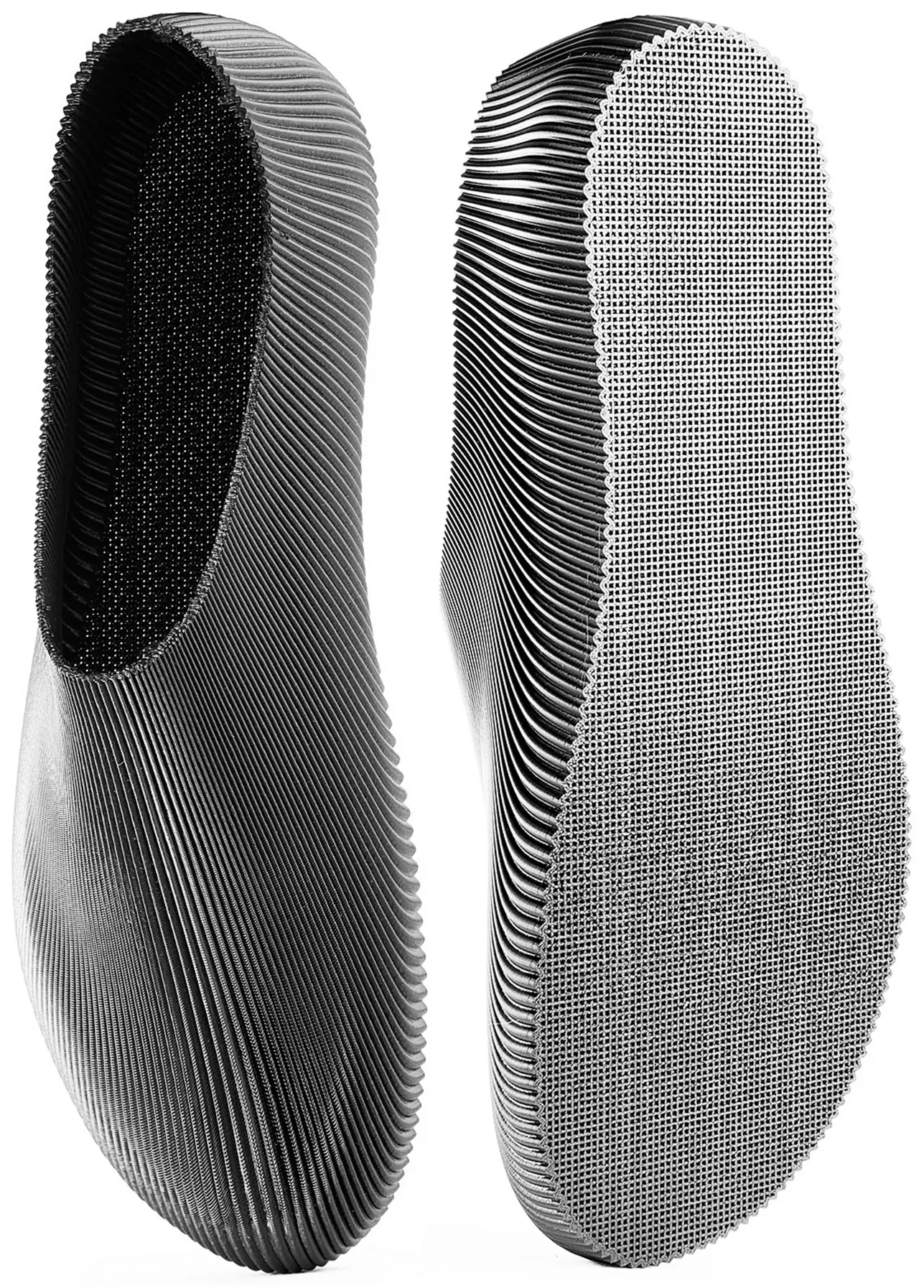
Onda — barefoot, reinforced flex zone
The smoother-inside barefoot shoe, with the 0.8 mm reinforcement on the inner front built into the design and a Grasshopper-generated 0.65 mm / 0.24 mm toolpath. The longest-lasting River barefoot shape we ship.
View Onda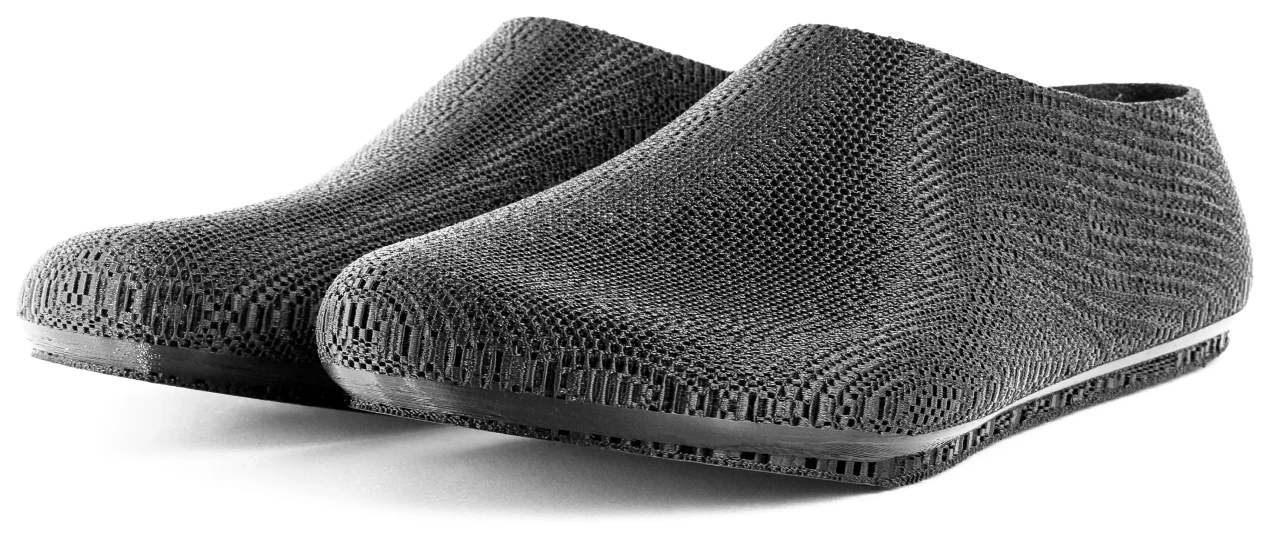
Taka — soled barefoot, reinforced
The thin-soled version of Tora with the same inside-front reinforcement. The sole protects the foot from rough floors and adds outdoor reach without changing how the upper flexes.
View TakaPrint these in TPU 85A using the Bambu Lab TPU workflow, and you have a shoe that fails in the right order: the upper structure first ages gracefully, then if you somehow wear through it the sole still has months left.