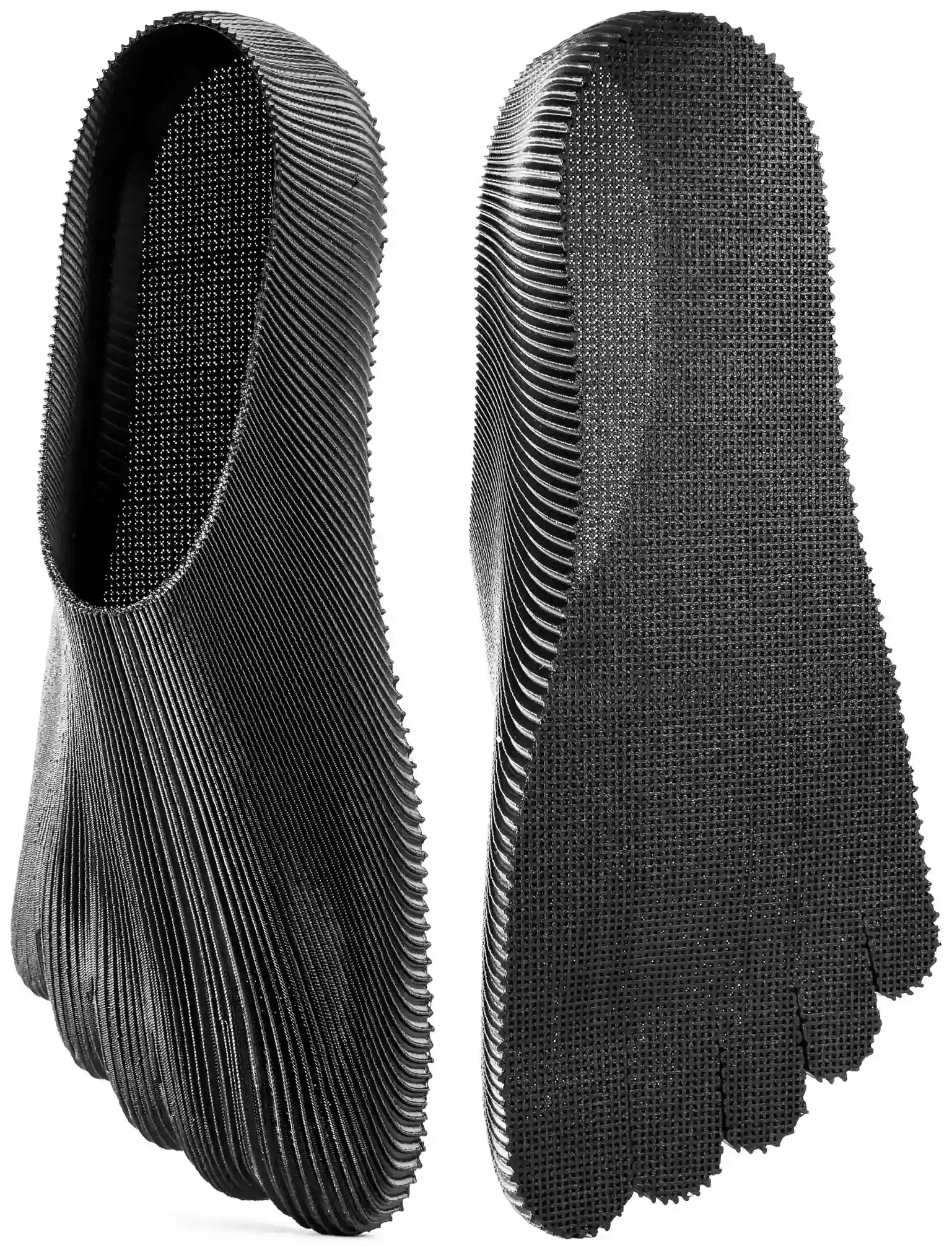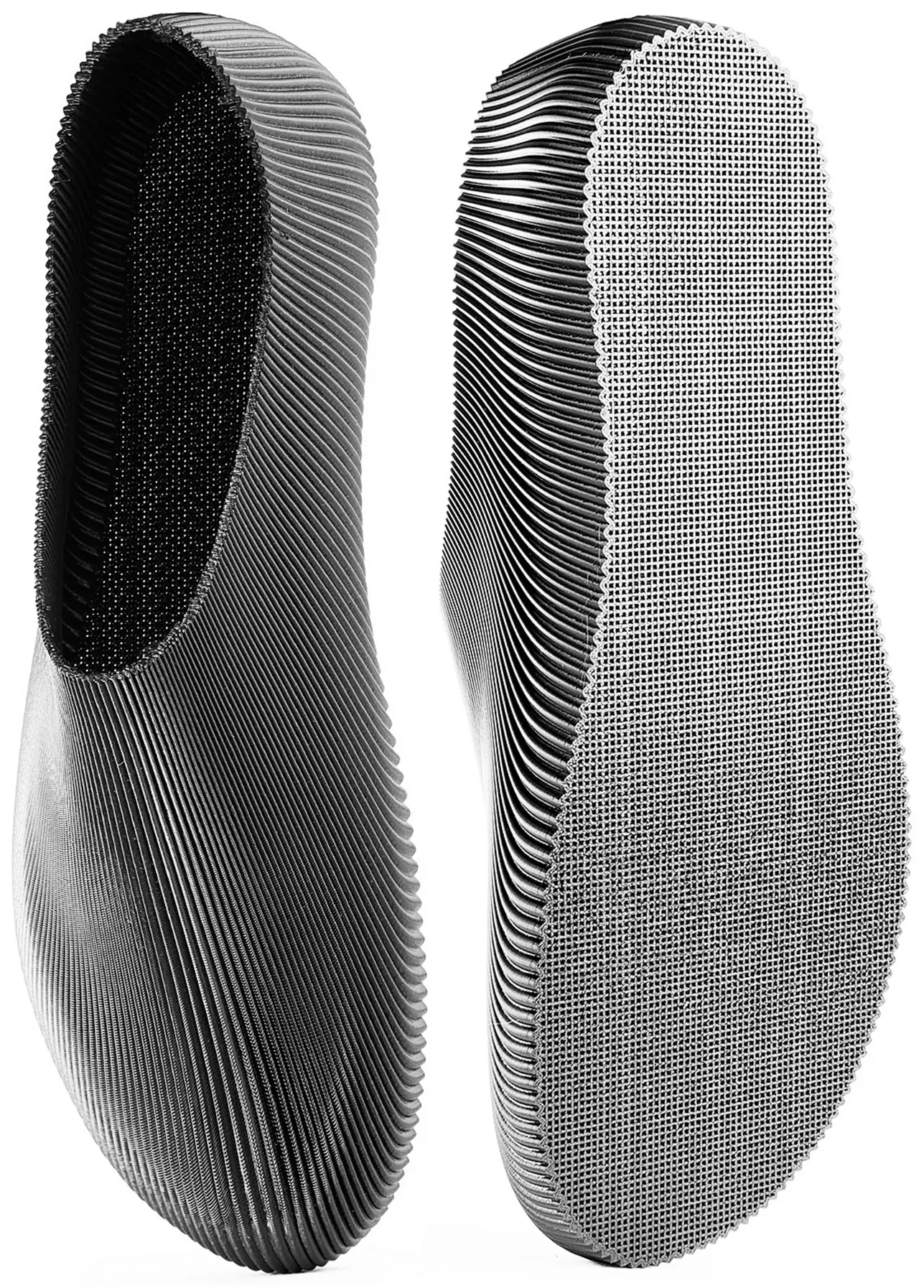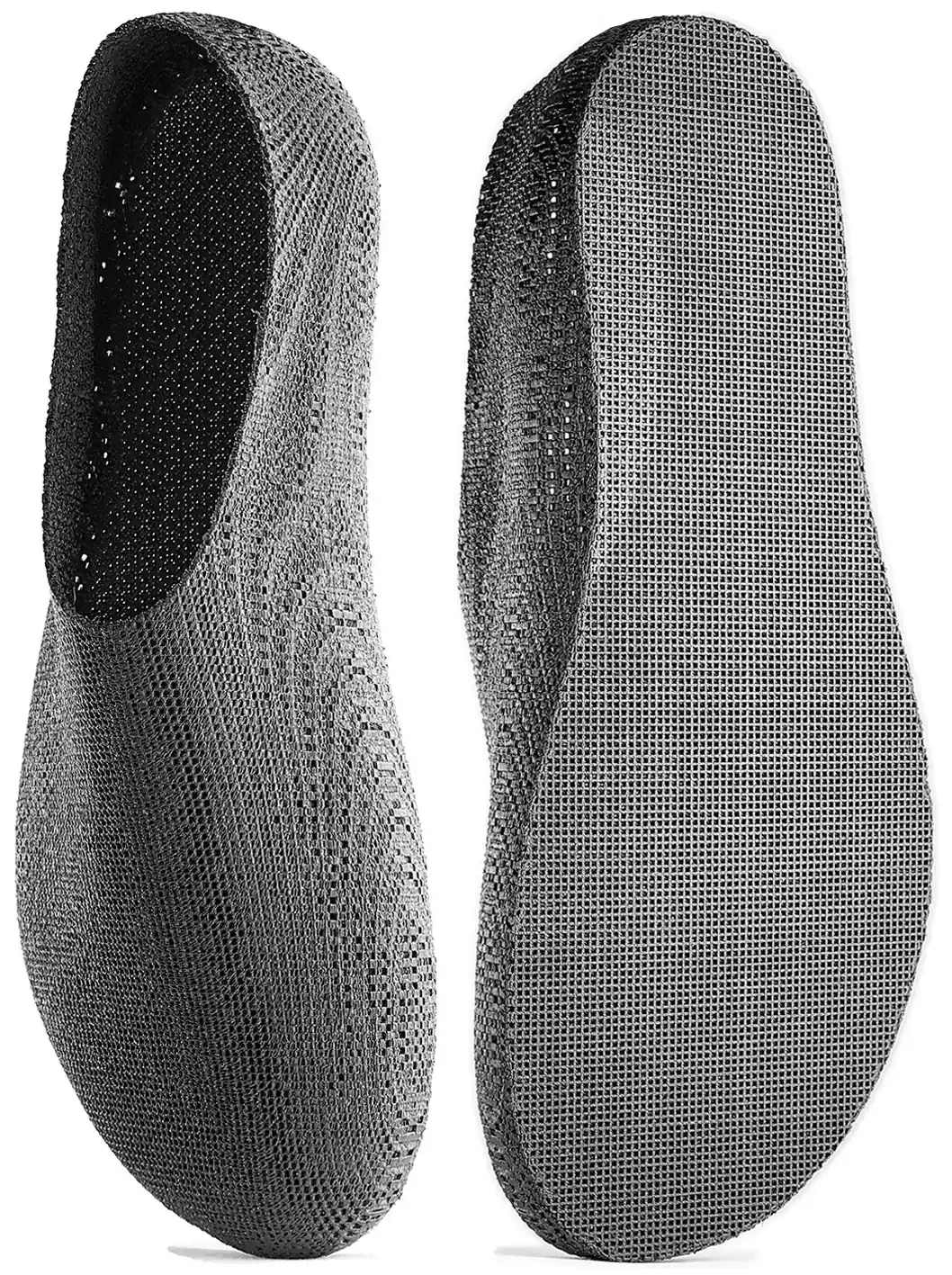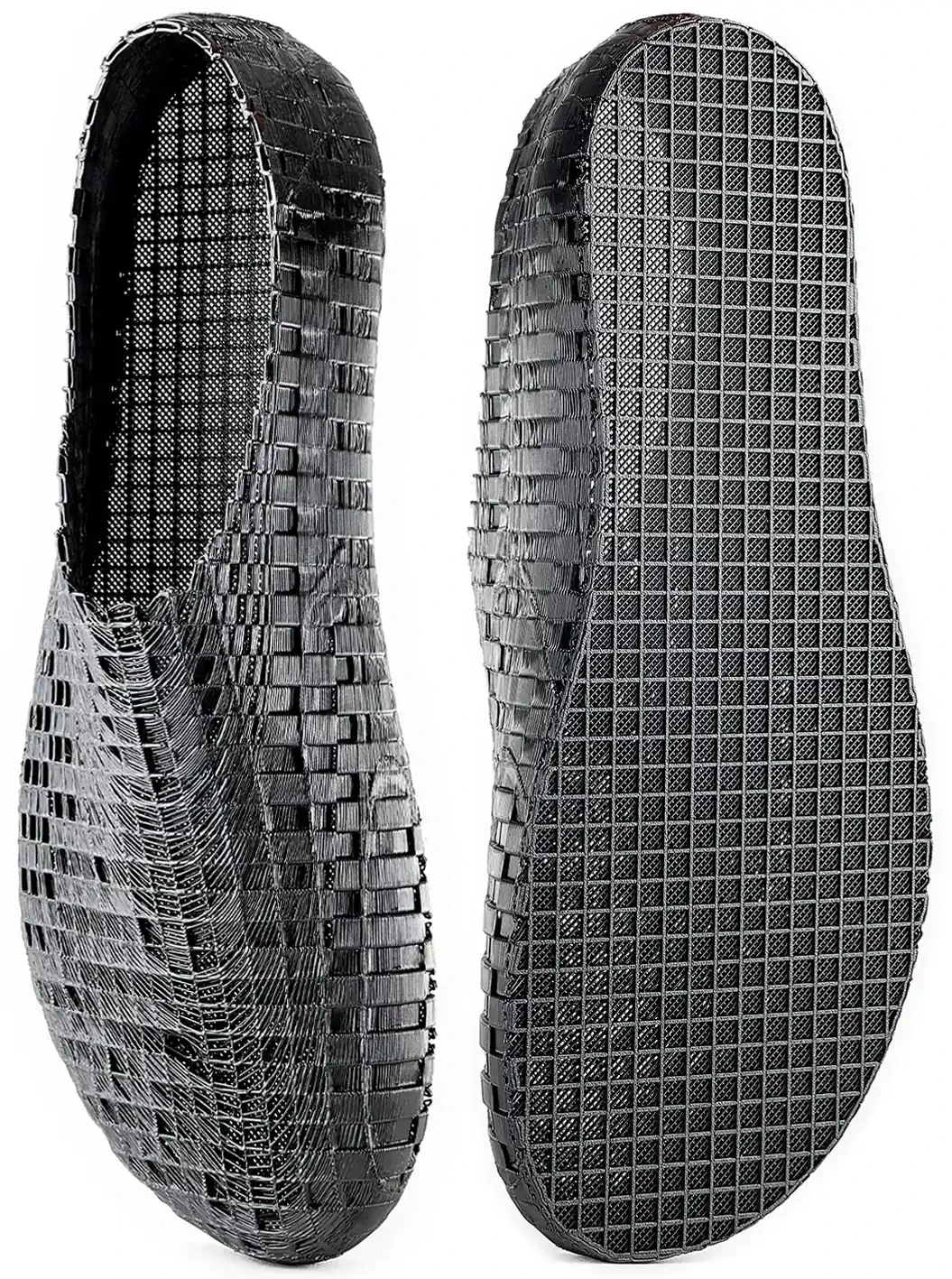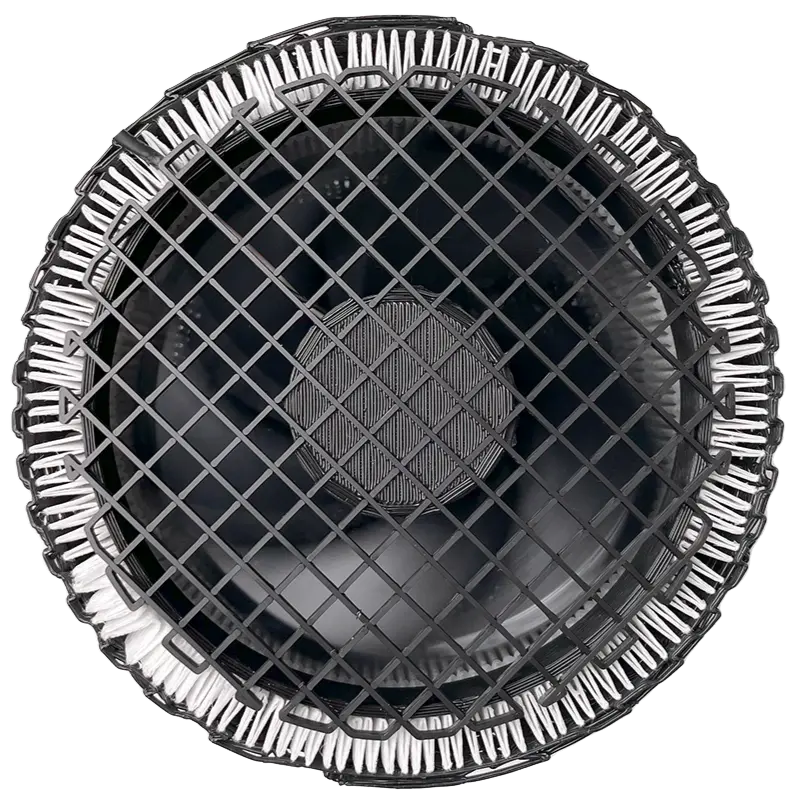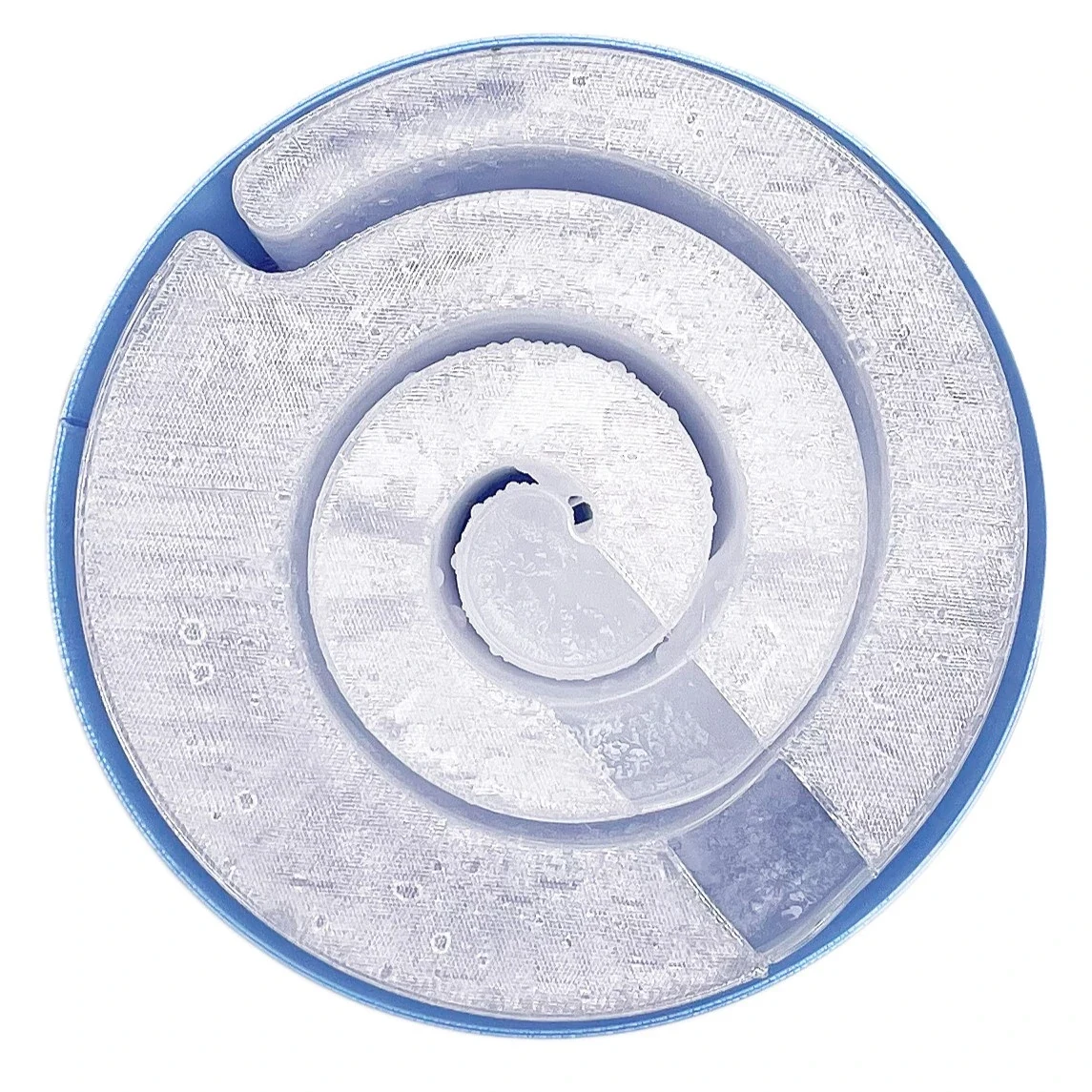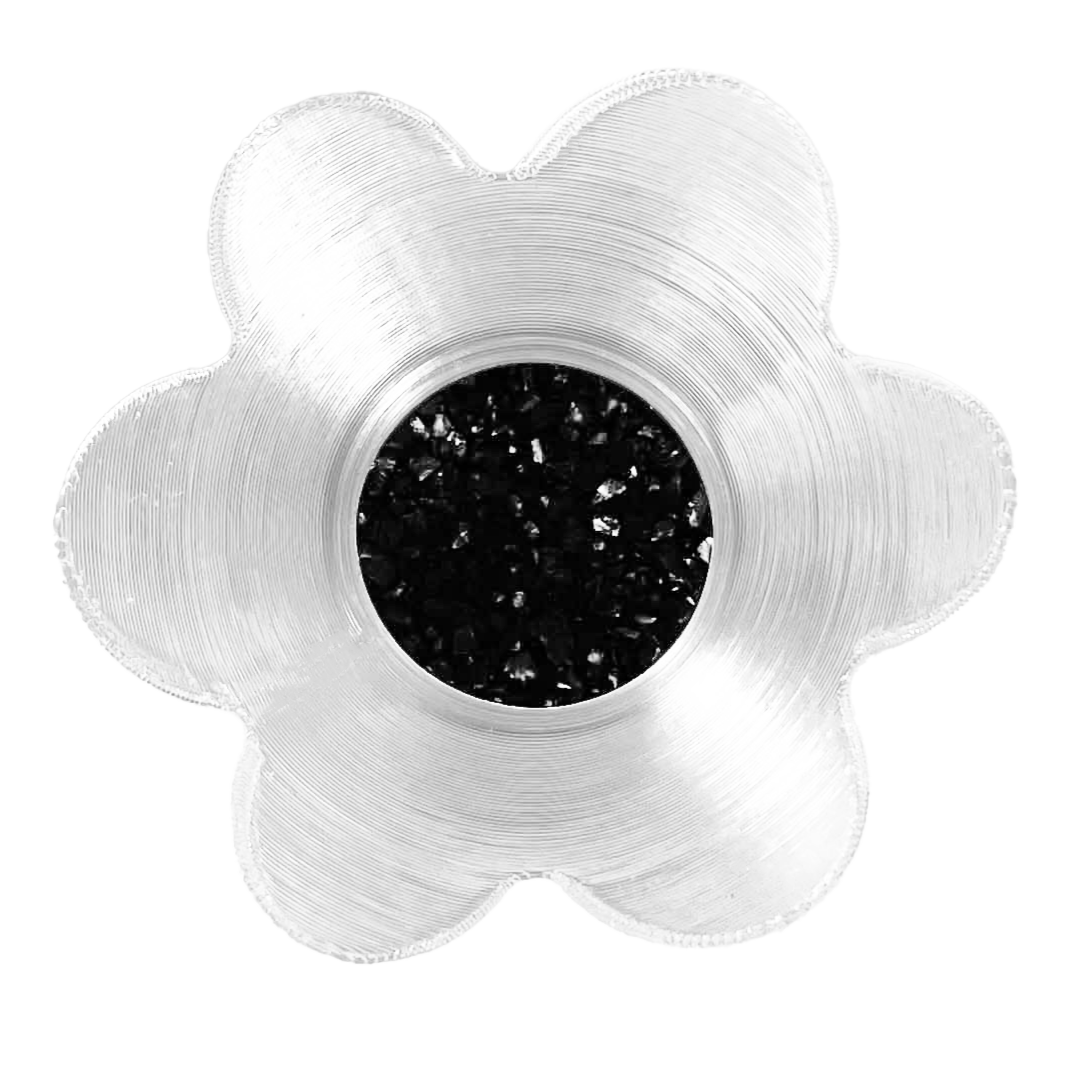
Taka, Tryton, Yume and E7 are one close River shoe family, not four unrelated designs. They share a similar soled 3D structure, then the last, thickness, sole split, print orientation and reinforcement decide how each version behaves.
The video starts from a shoe last workflow. Alessio sculpts the last, duplicates it for another size, then scales the geometry for a target number — for example size 42 from a size 45 reference — before building the printable shell around it.
A key early step is thickness. The model is solidified outward, about 2.5 mm, so the inside does not become a doubled surface. The bottom is cut with simple cube and cylinder geometry, then rebuilt as a cleaner sole instead of left as a raw upper.
Taka is the horizontal-print reference. The upper stays breathable, the lower sole is filled so mud does not get trapped in a grid, and a water-blocking side band keeps wet ground from reaching the foot. The printable stack becomes top grid, inner grid, solid side, sole grid and filled bottom.
Tryton changes the feeling by changing orientation. It is printed at about 45°, so the same grid logic reads less like square cells and more like a diagonal fish-scale rhythm. The model can be thinner in places — around 1.5 mm — because the orientation gives a different strength/flex balance.
Yume is close to Tryton but starts from the back instead of the front. On a normal printer it still needs careful placement and overlap handling; on a belt-printer workflow the orientation can remove the need for support, which is why the slicing path matters as much as the model shape.
E7 is the thin-soled version of Aspys. Both shoes print vertically together, mirrored and fused at the collar, so the two thin collar zones support each other during the build. After printing, the joined collar area is separated with scissors.
The slicer setup is not cosmetic. Some areas stay open and flexible; other areas become nearly solid with walls, high rectilinear infill, tuned line width and strong infill-to-wall overlap so the shoe does not separate under stress.
Flow is part of the strength work. The transcript shows higher flow ratios with reduced line widths so paths fuse better. A shoe can look correct in preview and still fail if walls, flow and overlap are not tuned for bending.
The belt-printer section is a useful warning. A CR-30-style setup needs transformed G-code: clean the Bambu Studio output, shift the Y coordinates against the 45° belt plane, scale Z by the square root of two, then verify the result against belt-printer slicing.
Reinforcement is placed where the foot bends and where shoes tend to break. Instead of adding bulk everywhere, the model is split into internal and external regions so extra material appears only where repeated flex needs it.
If you are choosing between Taka, Tryton, Yume and E7, start from the silhouette you like, then remember that the real design is the full stack: last, thickness, sole, orientation, slicer zones, flow and reinforcement.
Video chapters: 0:00 Taka, 30:27 Tryton, 1:02:15 Yume, 1:19:48 E7, 1:39:50 Cura Slicer, 1:48:47 Reinforcements.
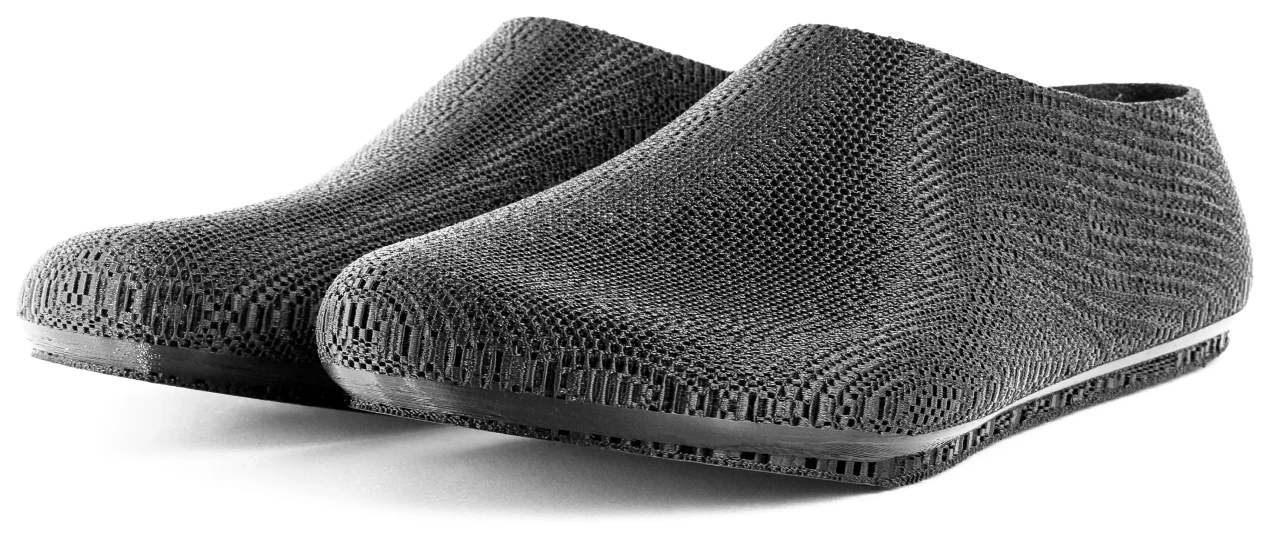
Taka
The thin-soled version of Tora: the same small-grid barefoot idea with a fine sole added for more ground protection while keeping the upper light and breathable.
View design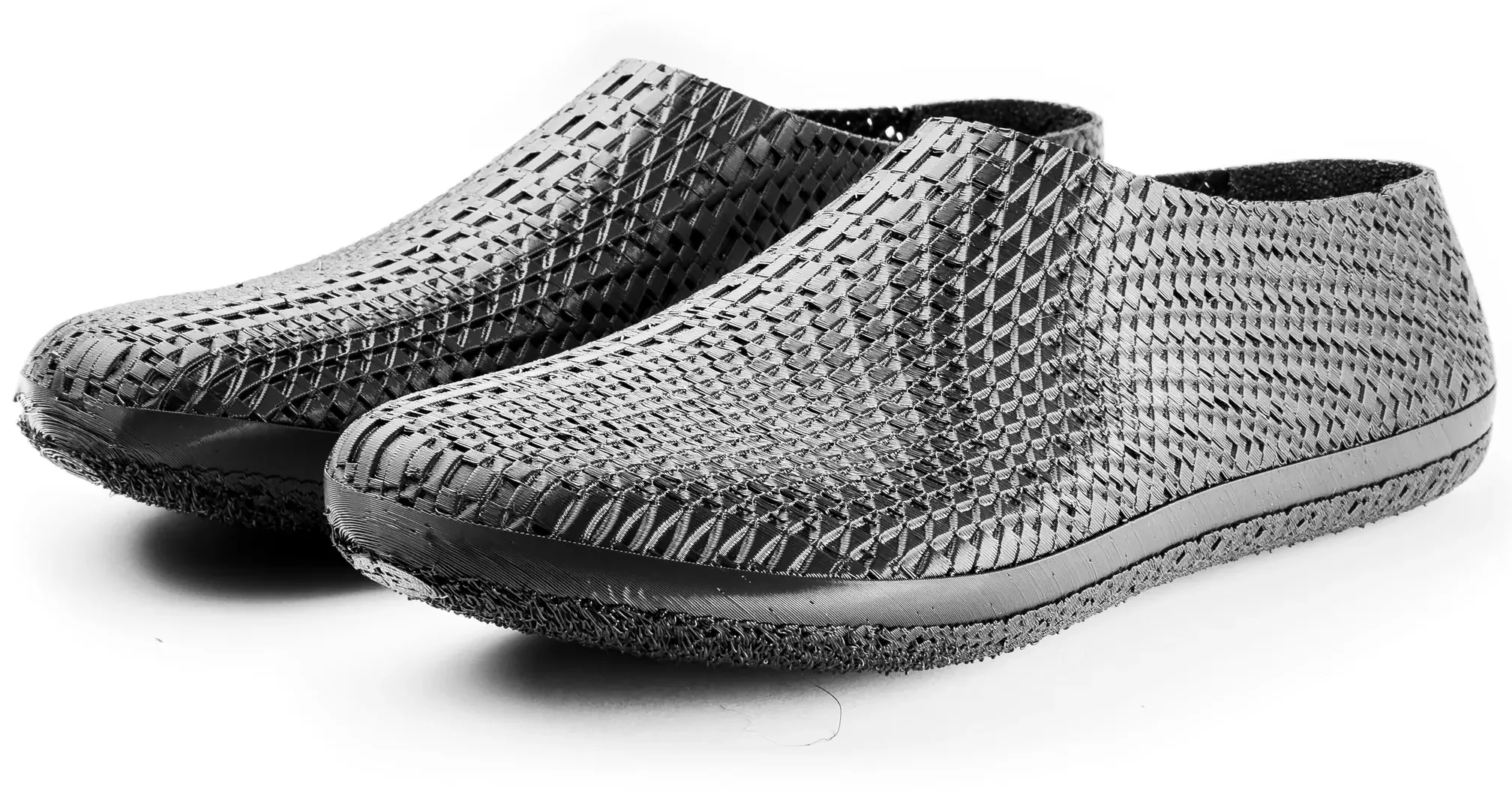
Tryton
The thin-soled version of G0: the same 45 degree, toe-down grid logic with a fine sole added underneath.
View design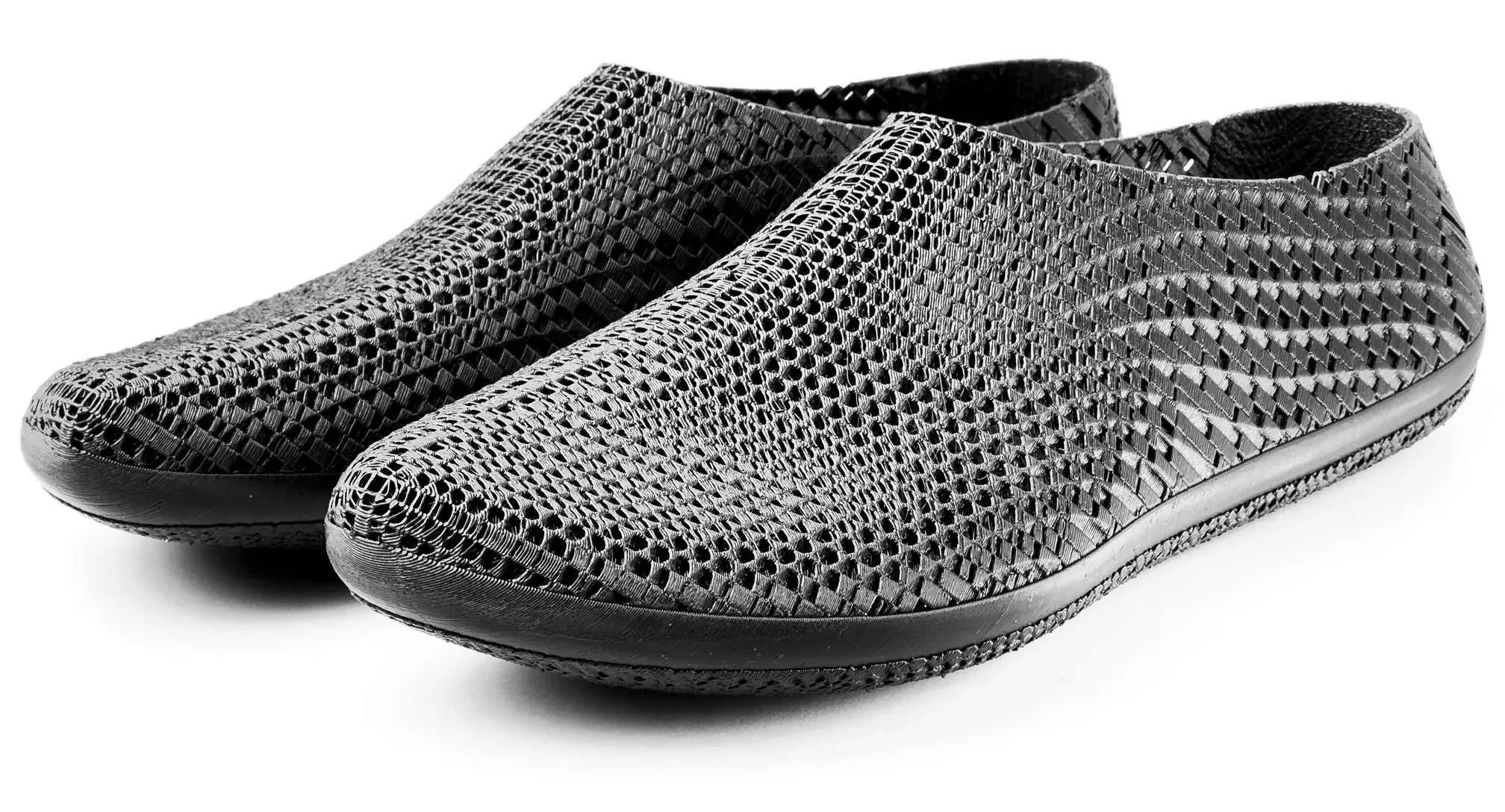
Yume
The thin-soled version of Mirai: the same 45 degree, toe-up grid logic with a fine sole added underneath.
View design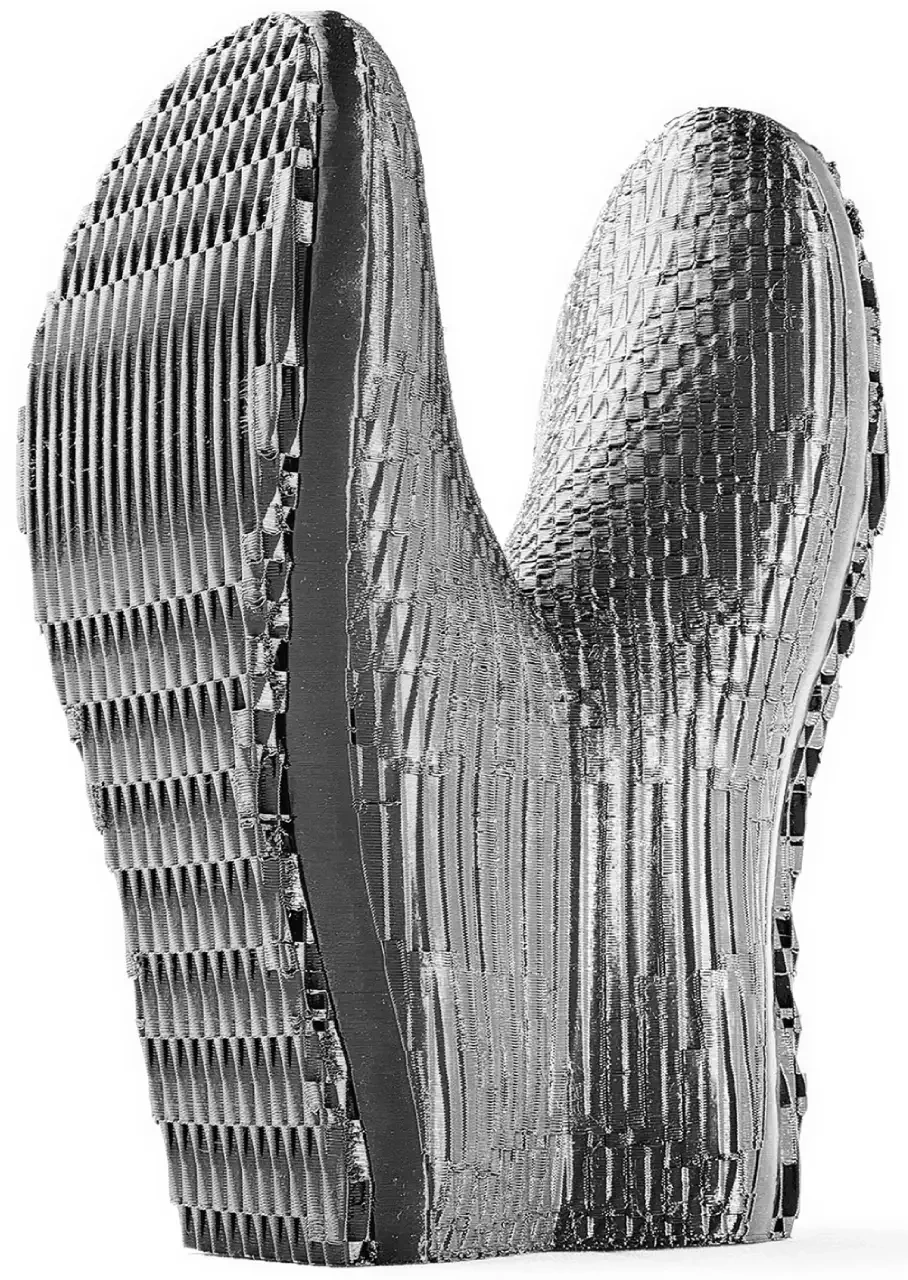
E7
The thin-soled version of Aspys. Like Aspys, E7 prints vertically as a mirrored pair fused at the collar, then the two shoes are separated with scissors after printing.
View design