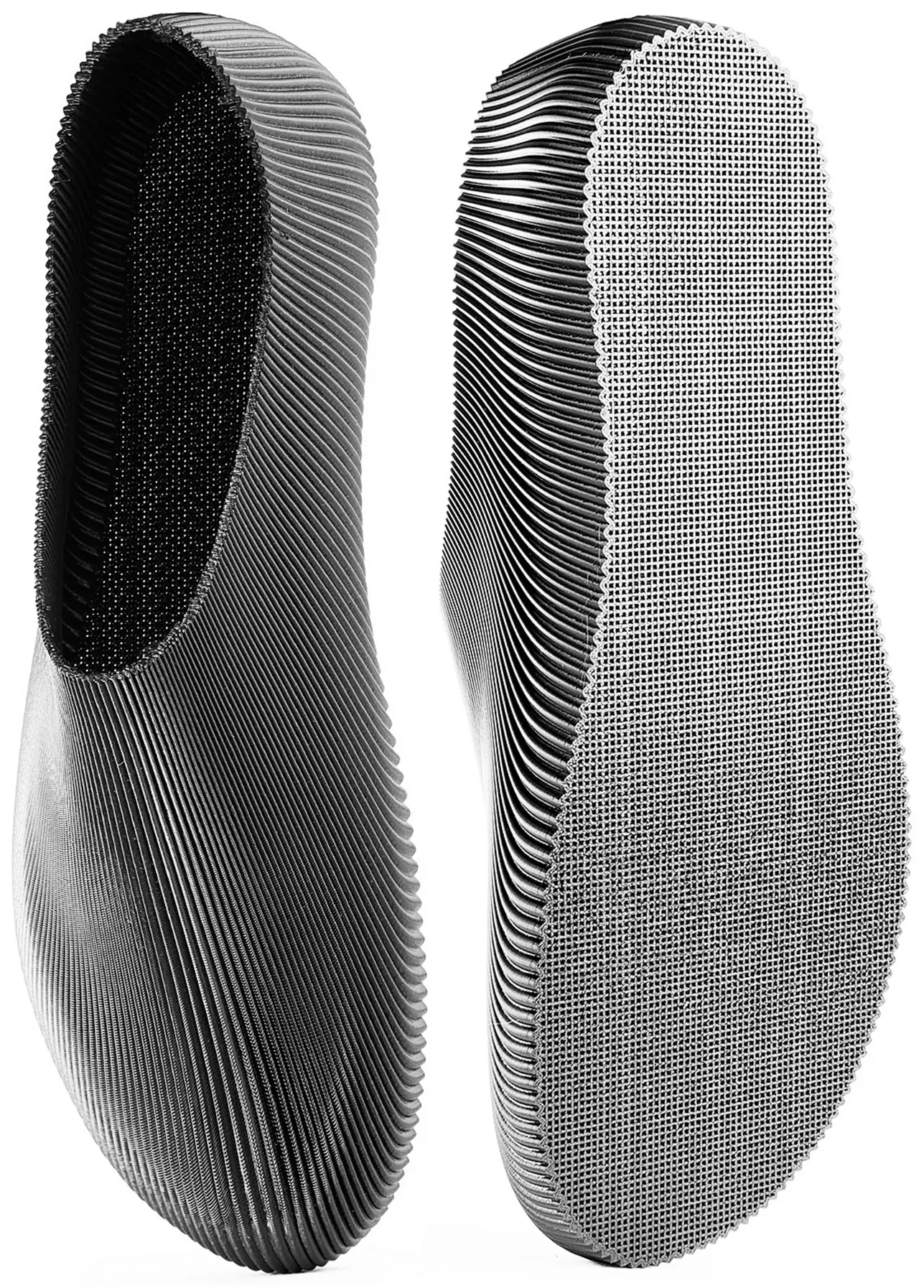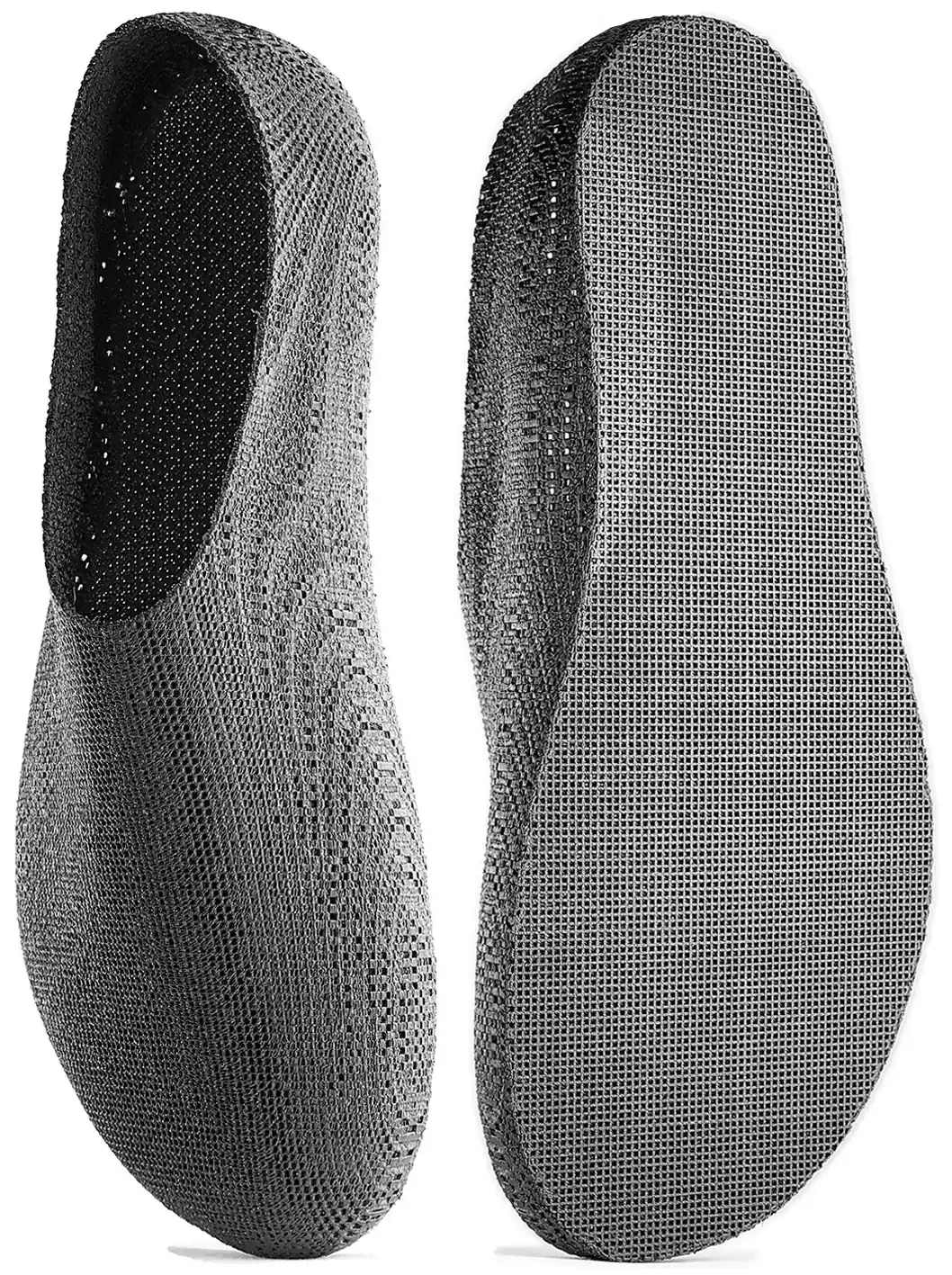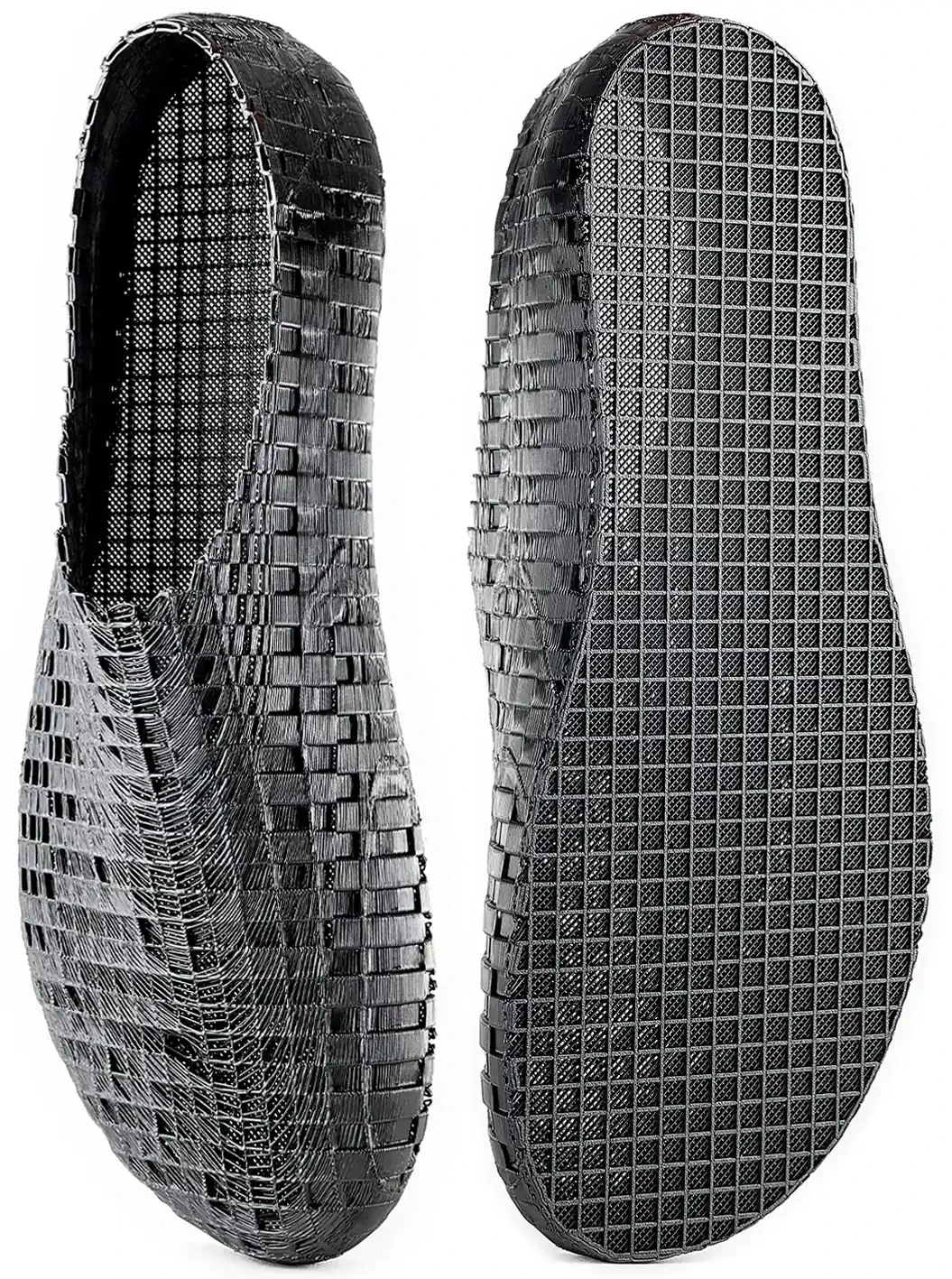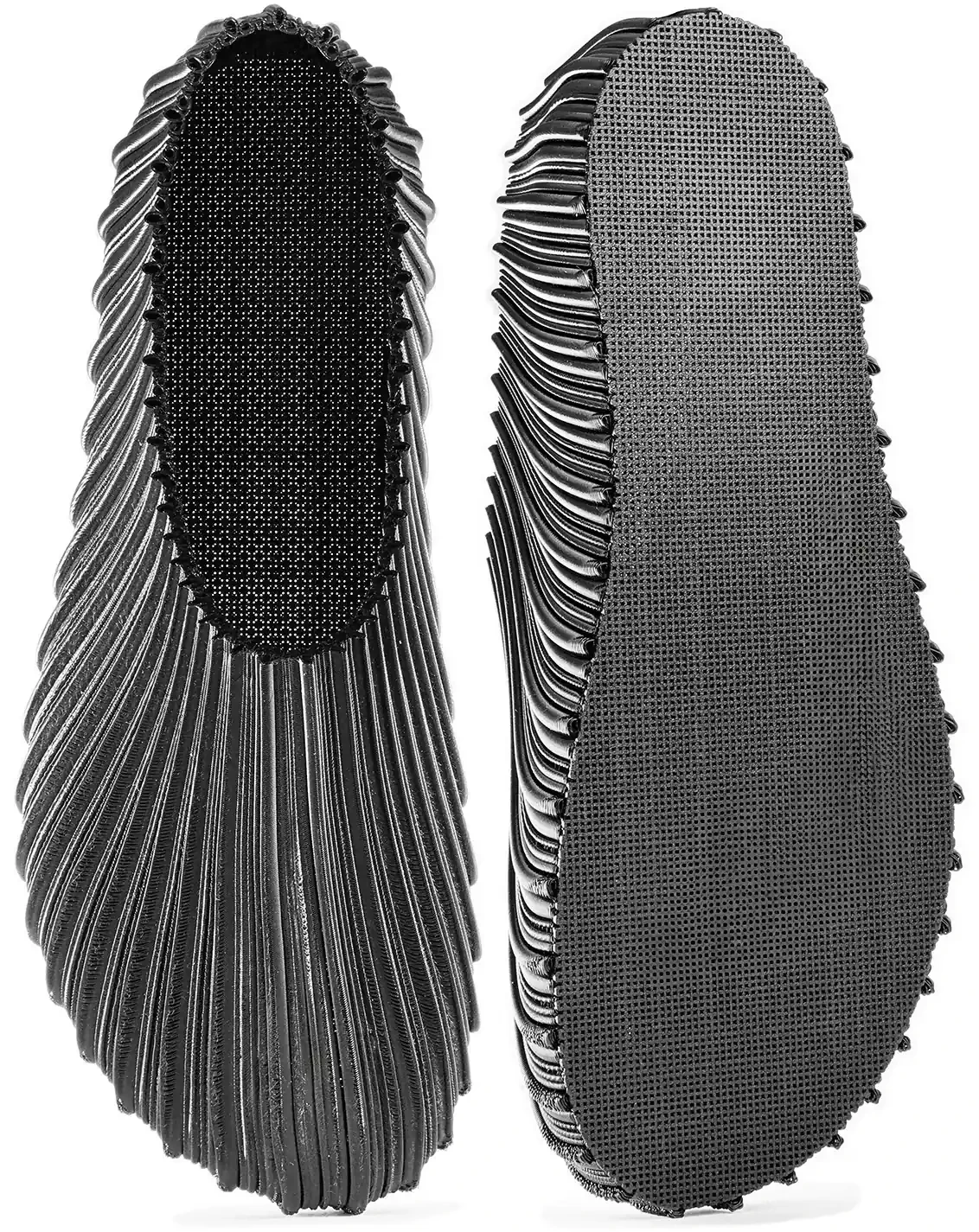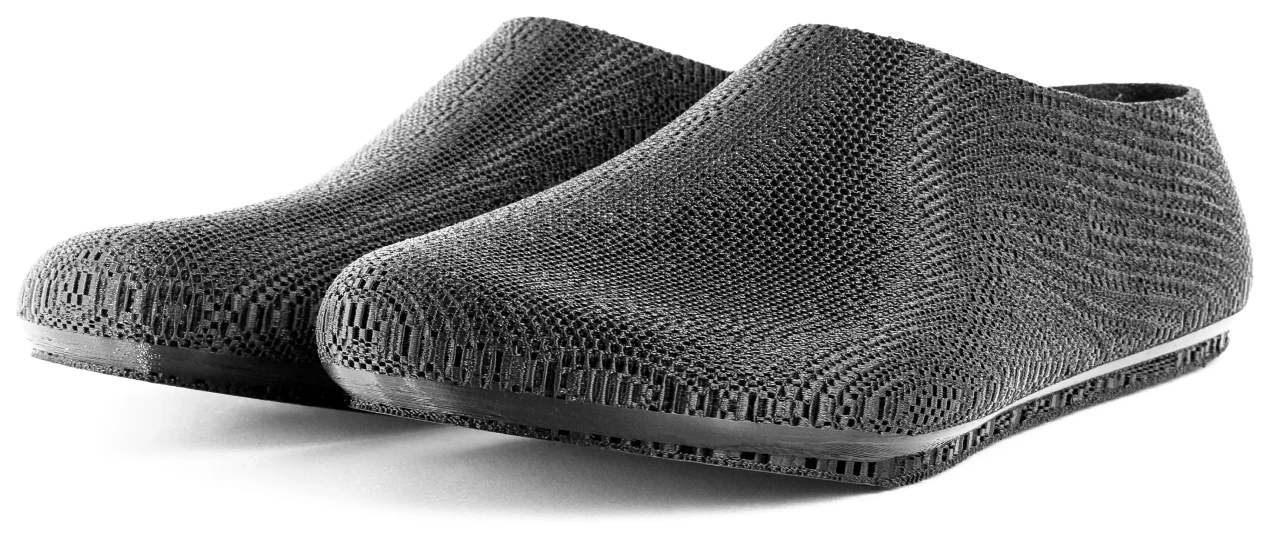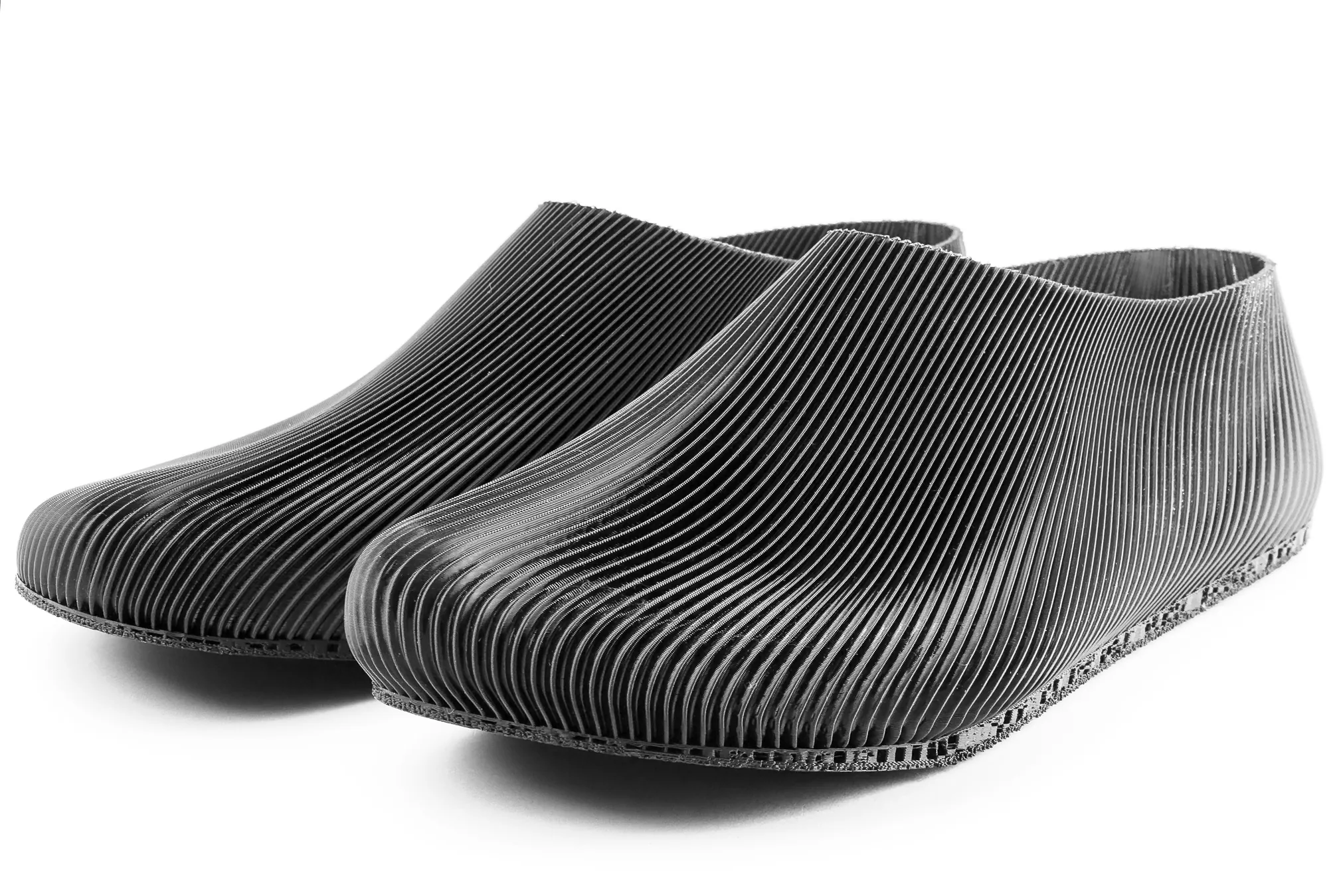
A 3D printed shoe can be comfortable, but it should not be judged like a foam sneaker. The comfort comes from the whole system: the shape of the last, the flexibility of the TPU, the way the structure bends, and how much contact the inside surface has with your foot.
The first surprise is usually psychological. People expect printed plastic to feel hard. River shoes are designed around flexible filament and open geometry, so the shoe can move, breathe through the structure and keep the foot away from a narrow sneaker shape.
The second surprise is material hardness. A shoe printed in a hard 95A TPU can look successful and still feel stiff or scratchy. Softer TPU can feel better, but it also asks more from the printer. That tradeoff is why comments about filament matter as much as photos.
Comfort also depends on where you wear them. Around the house, in socks, or for short dry walks is a very different test from wet pavement, long days or rough ground. A good design page should say that clearly instead of pretending every printed shoe is a universal replacement for every sneaker.
The best first test is simple: choose the right size, wear socks first unless the model is made smooth enough for barefoot use, walk briefly, and listen to pressure points. Onda is the clearest River example of the iteration paying off: smoother inside than Tora, more comfortable without socks, and stronger because the pattern was designed as the toolpath.
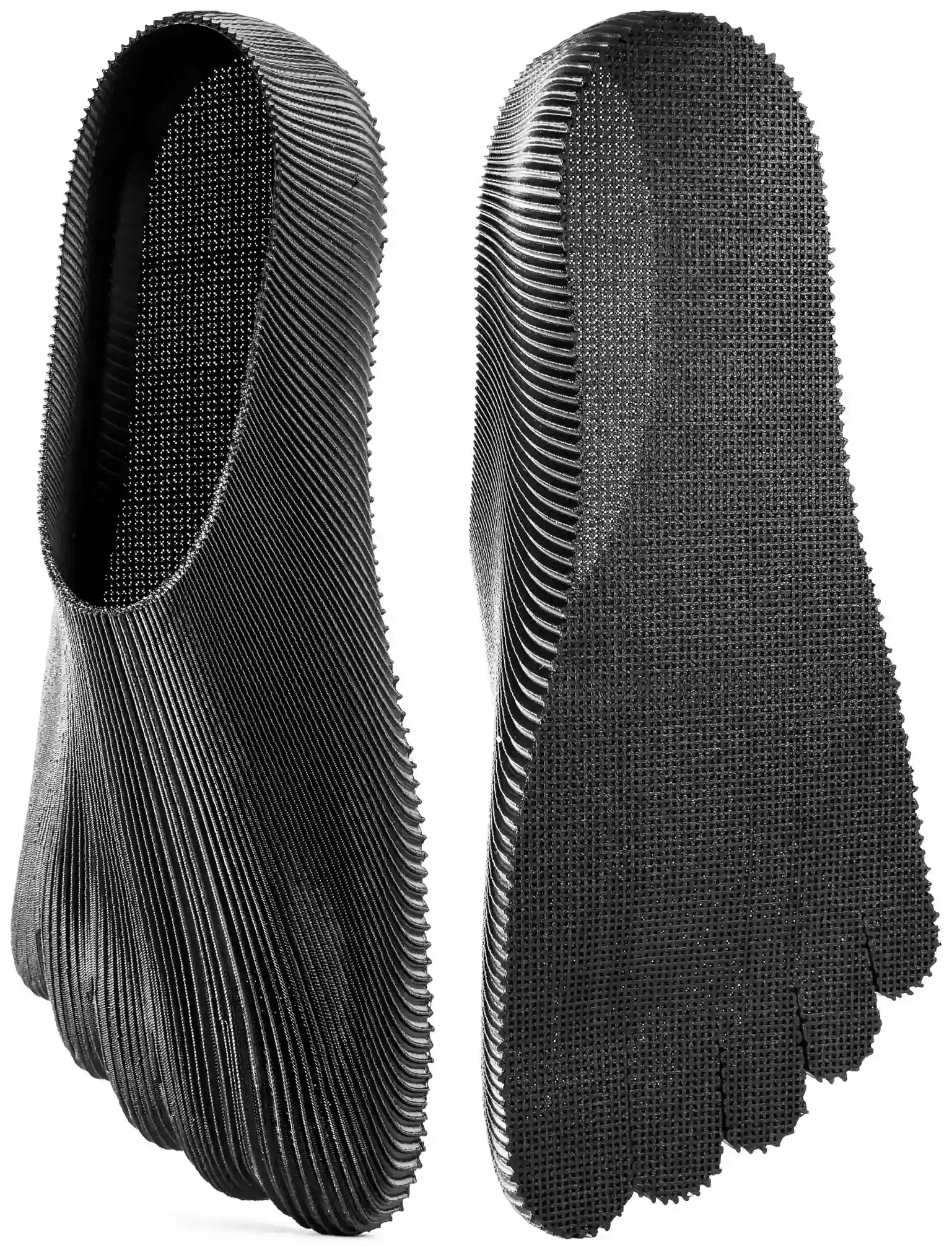
Toe
A barefoot River shoe with separated toes for more movement, using the same controlled wave-pattern idea as Onda: interleaved semicircular curves shaped around the foot.
View design